
My first time at a machine learning conference
NeurIPS 2025 in San Diego, and a few things I didn’t expect

In the first week of December, I went to NeurIPS in San Diego. It was my first time at one of the “big” machine learning conferences, and I wanted to share a few reflections while they’re still fresh.
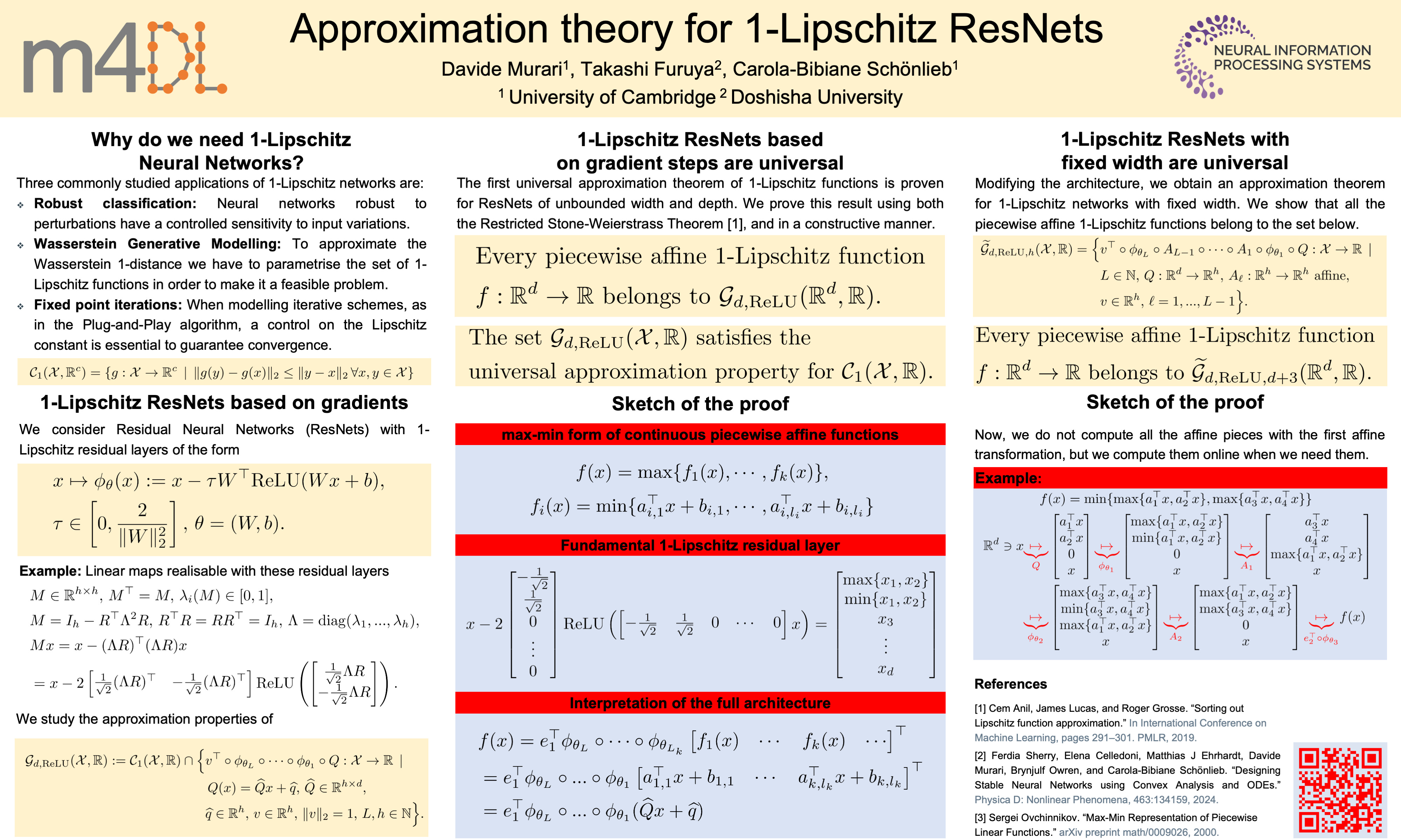
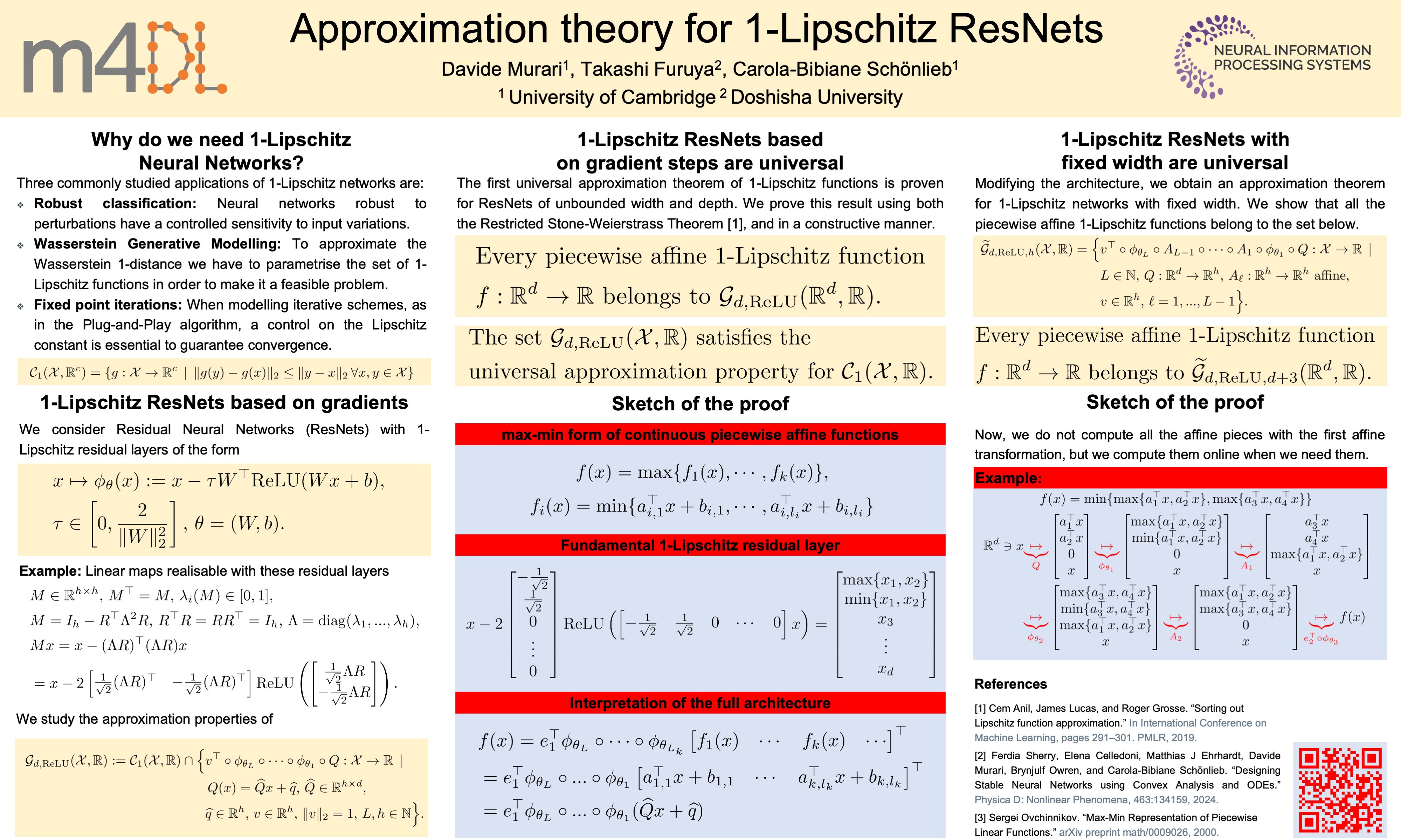
I typically prefer math journals for my research papers, but this time I submitted to NeurIPS, and it went well. The work, titled Approximation theory for 1-Lipschitz ResNets, was accepted as a poster.
Before the conference: poster prep and a new city
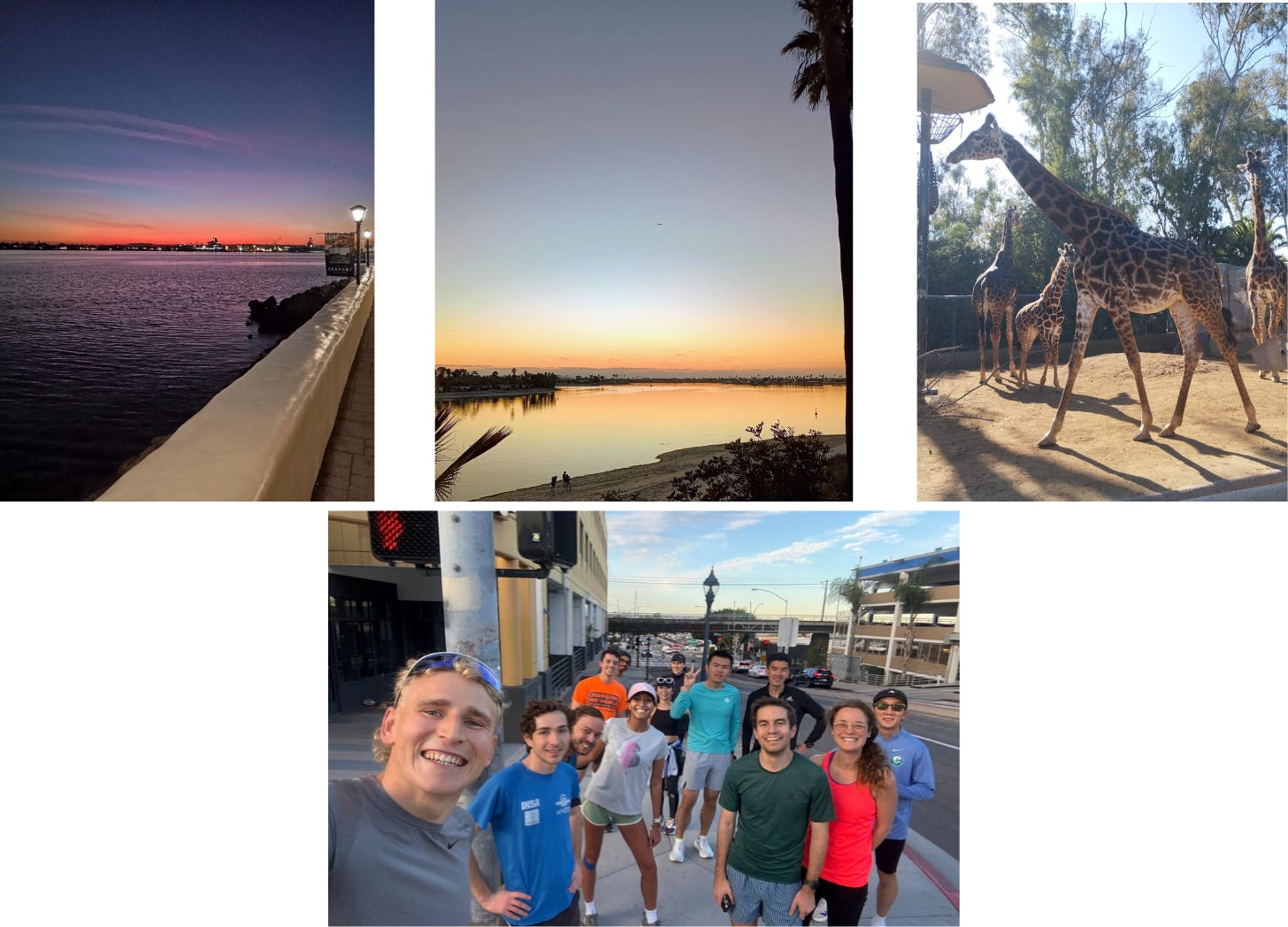
After preparing the poster (you’ll find it below), I went to San Diego a few days before the conference. It was my first time there, so I did the obvious thing: walked around a lot, enjoyed the weather, and tried to arrive at the conference with a bit of energy in the tank.
Day 1: the scale shock
On Tuesday, the conference began, and, used to much smaller events, I was genuinely shocked. The biggest conference I had attended before was probably SIAM CSE 2023 in Amsterdam, which already felt large (around 2k participants).
NeurIPS was a different universe: more than 20k registered attendees, endless parallel sessions, and the constant doubt of where to go.
On the first day, I attended a tutorial on explainable AI. I learned a few interesting ways to inspect neural networks, and I will definitely explore this topic more.
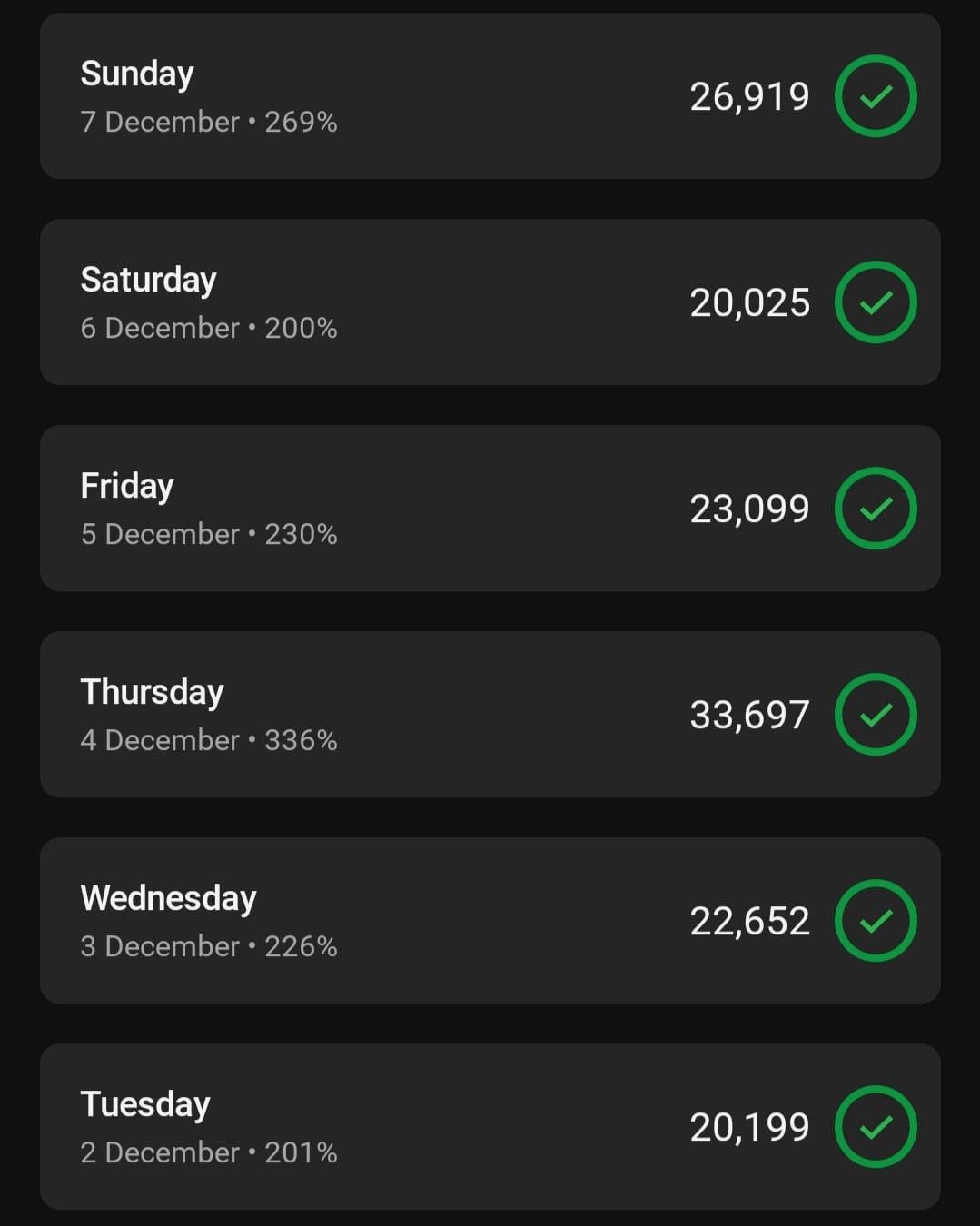
Still, besides the evening reception and chatting with a few people, I didn’t immediately feel the value of the conference. The first couple of days had a lot of “walking + scanning + being overwhelmed” energy.
Midweek: poster sessions are where it clicked
On Wednesday, the poster sessions began, and that’s when I started to appreciate the upside of having this many people interested in machine learning in the same place.
Even though I work on fairly niche topics (approximation theory, structure-preserving deep learning, and scientific machine learning), there were always papers to look at and presenters to talk with. The density of ideas is real, and it’s hard to replicate outside a big conference.
I also realised how much of a recruitment event NeurIPS is. Companies were everywhere. I mostly limited myself to picking up a few gadgets and having a couple of interesting conversations, but I didn’t interact much with that side of the conference.
Friday: my poster session
On Friday afternoon, my poster session turned out to be one of the two best moments of the week. The reason is simple: I didn’t have to work to find interesting people to talk with. They were coming to my poster.
I was positively surprised by how many people stopped by, and I also made a few relevant connections. Clearly, it was nothing compared with the really popular posters, but more than enough for what I was looking for.
I also learned something practical: my poster alone wasn’t enough to make some points clear. I often needed my laptop to show details, highlight a subtle point, or scroll through a figure. Next time, I’ll design the poster assuming I have precisely two minutes to communicate the core idea, and everything else is optional. My paper is purely theoretical, but I could have made the poster more visual by adding a bit of background and motivation drawn from previous projects.
Saturday: the workshop that felt “closest to home”
The second most valuable moment for me was the workshop on Machine Learning and the Physical Sciences. This topic aligns well with my interests and research, so I gained exposure to several promising directions, met people working on similar problems, and attended a couple of panels that left me with a lot to think about.
Workshops also felt like a good “compression layer” for the conference: fewer talks, a narrower theme, and a crowd that is self-selecting for what you care about. Much closer to the conference experience I’m used to, and I enjoy.
Flying home with a better opinion than I expected
I flew back to London on Sunday, after an intense but fruitful week.
If I had judged the experience based on the first couple of days, I probably wouldn’t have wanted to come back. But then it became much better. Simply because of the sheer number of people, it’s probably the conference that gave me the most ideas and inputs in a short time.
At the same time, most talks and posters were not directly relevant to my research, or I didn’t have enough context to appreciate them. So maybe one concrete takeaway is that I should start reading at least a few papers beyond my usual comfort zone.
Another takeaway, based on browsing posters, is that “accepted at a top ML conference” no longer feels synonymous with “high-quality research” as it once did. At this scale, the signal is noisier: I saw posters that were excellent and posters that (to me) didn’t contain many ideas. Maybe that’s just the inevitable trade-off.
Finally, I missed a lot of the socials, especially the evening events organised by companies, simply because I didn’t know they existed. Next time I’ll test them out too!
If you’ve been to NeurIPS (or another massive conference) and you have your own survival strategies, I’d love to hear them in the comments.
If you enjoyed this post, consider subscribing to and sharing the newsletter